
A new chapter in leadership
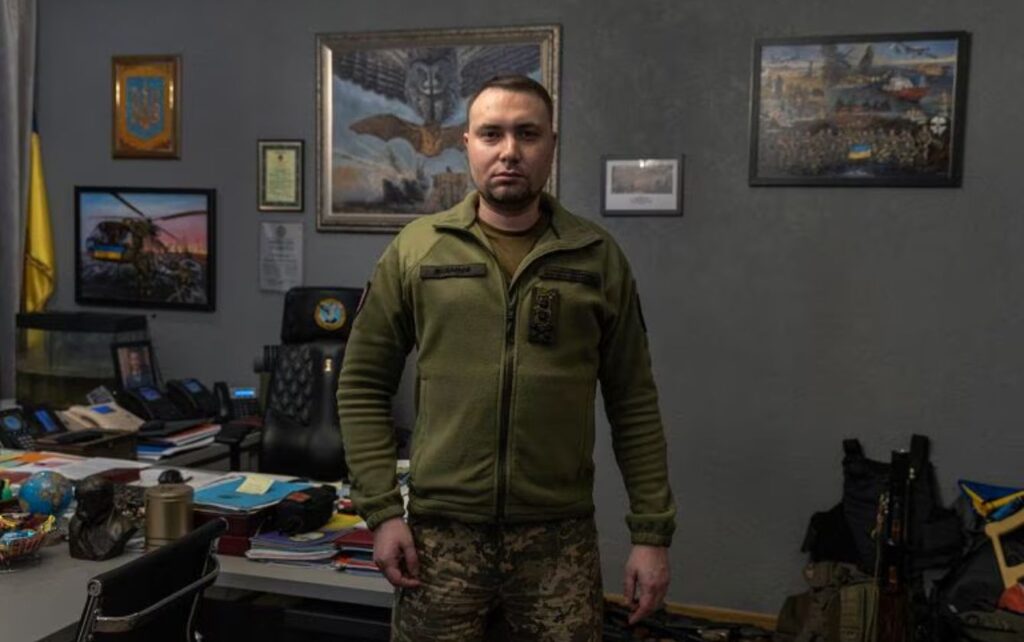
In early January 2026, Ukrainian President Volodymyr Zelenskyy made a decision that signalled a defining shift in Kyiv’s governance amid the ongoing conflict with Russia: Lieutenant General Kyrylo Budanov was appointed Head of the Office of the President of Ukraine (Chief of Staff), replacing Andriy Yermak after his resignation amid a high-profile corruption investigation.
At just 40 years old, Budanov’s transition from the head of Ukraine’s military intelligence (HUR) to the heart of the presidential administration reflects both public confidence in his integrity and a strategic emphasis on security, defence and diplomatic negotiation at the highest levels of the state.
Early life and military intellect
Born on 4 January 1986 in Kyiv, Budanov is a product of Ukraine’s own military education system, graduating from the Odesa Military Academy before entering the ranks of the Main Directorate of Intelligence in 2007. His ascent through the intelligence hierarchy was distinguished early by operational excellence, battlefield experience and resilience — including multiple wounds sustained in combat operations in the Donbas.
Budanov’s rise culminated in his appointment as Chief of the HUR in August 2020, a role he held through pivotal years of the Russian invasion. He entered the position as one of the youngest intelligence chiefs in Ukraine’s history, bringing an approach that blended tactical audacity with strategic discipline.
Operational achievements and Intelligence innovation
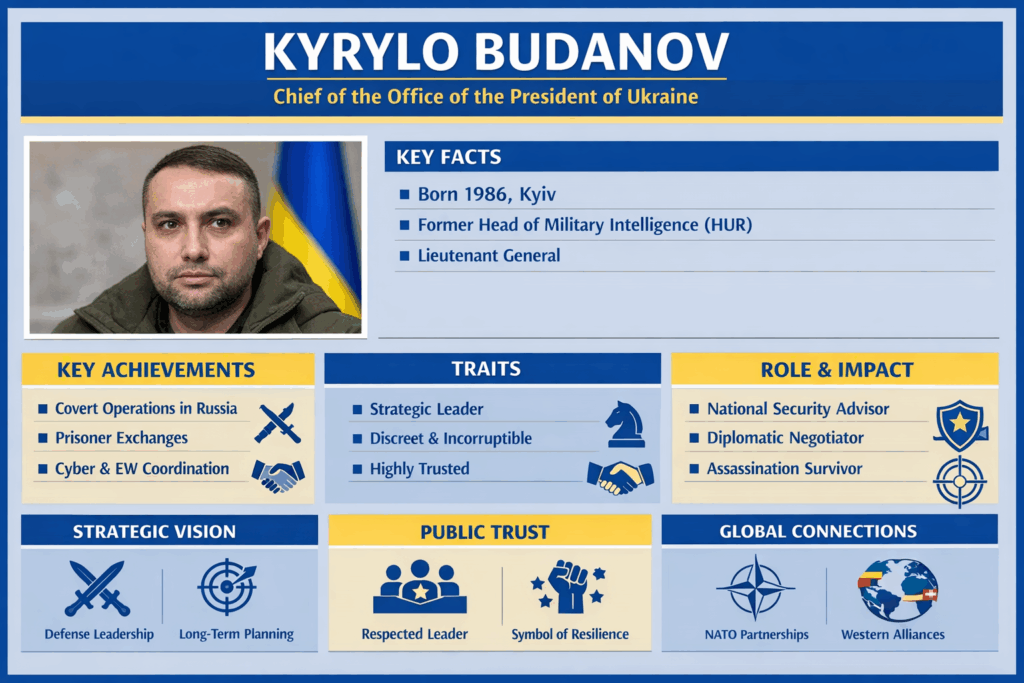
Under Budanov’s leadership, Ukraine’s military intelligence broadened its operational footprint and adapted to the demands of prolonged conflict. His tenure was marked by high-impact operations deep within Russian territory and occupied zones, demonstrating both technical ingenuity and a willingness to push the boundaries of conventional intelligence missions.
Budanov was also instrumental in coordinating complex prisoner exchanges with Russia, winning significant domestic credit for efforts that brought Ukrainian personnel home — a rare merge of diplomatic finesse with covert acumen.
His agency’s work extended to psychological and strategic signalling: frequent public appearances and measured commentary were used not only to inform but to shape perceptions on both domestic and international fronts. In a climate where information itself is a battlefield, Budanov’s calibrated visibility became part of Ukraine’s broader defence posture.
A record of resilience and personal fortitude
Budanov’s public role did not shelter him from personal danger. Multiple assassination attempts — reportedly more than a dozen (Le Monde)— attest to the threats he faced as a prominent architect of Ukraine’s intelligence strategy. His survival and continued service through these challenges lent him a reputation for stoic resolve and personal courage.
Such experiences, combined with his operational insights, have shaped a leader who is unflinching yet measured, capable of operating within the murky realms of espionage and statecraft without compromising ethical standards.
Elevated to the Presidential office
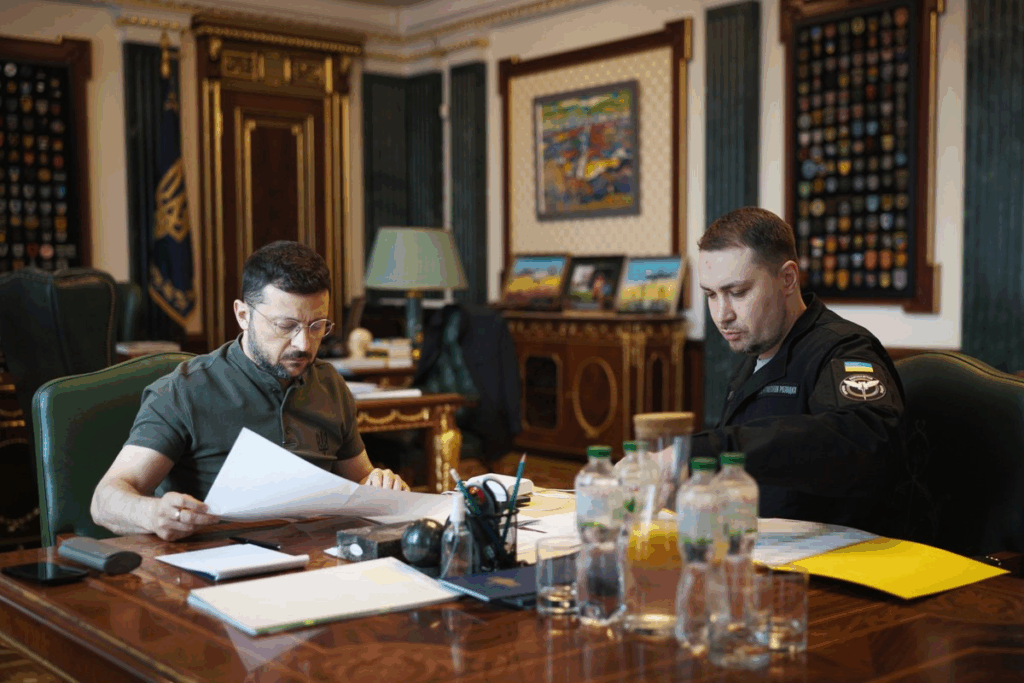
The strategic timing of Budanov’s elevation — on 2 January 2026 — underscored its significance. In a statement announcing his appointment, President Zelenskyy emphasised Ukraine’s need for greater focus on security, defence enhancement, and diplomatic negotiation. Budanov, the president stressed, possessed “special experience” and “sufficient strength to deliver results” in these critical areas. Forbes
This move was more than administrative; it reoriented the core leadership around expertise in strategic security at a moment when Ukraine’s war aims, peace negotiations and international alliances face intense pressure and scrutiny.
A figure of public trust and integrity
Budanov’s public standing distinguishes him in a political culture where fidelity and transparency are deeply valued by citizens weathering war and institutional uncertainty.
Polling from reputable institutions such as the Carnegie Endowment, International Republican Institute and National Democratic Institute reveal a remarkably high public approval for Budanov, with many Ukrainians regarding him as a symbol of steadfastness and competence. (source: Forbes)
His ethic of service, seriousness in public discourse and refusal to indulge in partisan theatrics have further solidified his integrity in the eyes of many — a rare combination of honesty, discretion, and strategic clarity.
Strategic responsibilities and future challenges
As Zelenskyy’s chief of staff, Budanov now occupies a role that bridges military strategy, executive coordination, and foreign policy priorities. His responsibilities include shaping Ukraine’s defence posture, advising on negotiations with global partners, and contributing to the strategic frameworks that will guide Ukraine through both war and reconstruction.
His experience in intelligence suggests he will continue to champion initiatives that align security imperatives with diplomatic engagement — a balancing act that will define Kyiv’s approach as peace prospects and battlefield dynamics evolve.
Legacy and broader significance
Kyrylo Budanov’s rise encapsulates a larger narrative of Ukraine’s wartime evolution: the fusion of military professionalism with political leadership. The elevation of strategic competence over factional rivalry and the cultivation of public trust through integrity and resilience.
His appointment marks a departure from the traditional civilian dominance of political office toward leadership chosen for strategic acuity and operational credibility — an evolution that reflects the extraordinary demands placed on Ukraine’s institutions by the prolonged conflict with Russia.
Whether Budanov’s tenure will steer Ukraine toward a sustainable peace or transform the country’s post-war governance structure remains a central question of 2026.
Is already clear that Budanov profile is defined by a rare blend of discretion, tenacity and national service — qualities that have made him one of Ukraine’s most trusted figures in an era of existential stakes.
Sources:
Forbes, Leading Architect of the New Warfare: Ukraine’s Chief of Intelligence (22 Dec 2025); Forbes
Le Monde, Kyrylo Budanov, Master Spy and Support for Zelensky (3 Jan 2026);








Follow us